
How to Create Viral Short-Form Content for Your Product in 2026
A practical, step-by-step guide to creating viral short-form video content for your startup or product: find trends, generate AI UGC, write scroll-stopping hooks, and schedule a month of TikToks, Reels, and YouTube Shorts in minutes.
Key takeaways
- Socialinsider's 2026 study of 6 million brand videos found 15 to 30 second TikToks earn the highest engagement rate at 6.00 percent, while 120 to 180 second videos earn the most median views.
- Buffer's 2026 frequency data shows accounts posting 2 to 5 times a week get up to 17 percent more views per post than weekly posters, rising to about 34 percent at 11 or more posts a week.
- Average engagement in 2026 is 2.60 percent on TikTok, 0.45 percent on Instagram Reels and 0.30 percent on YouTube Shorts, so "viral" should be judged against your platform, not a single number.
- No primary study supports the popular claim that viewers decide in the first second or the first three seconds; those figures trace back to unsourced blogs.
- All three platforms distribute to non-followers based on watch time and engagement, so a brand-new account can reach an audience it does not have yet.
Short-form video has become the single most powerful distribution channel on the internet. A 15-second clip filmed on a phone can out-reach a six-figure ad campaign, and it costs nothing to post. For founders and marketers, that makes short-form the highest-leverage growth channel available in 2026. This guide breaks down exactly how to create viral short-form content for your product, step by step, even if you have never made a video before.
What is short-form video content?
Short-form video is any vertical clip, usually under 60 seconds, made for TikTok, Instagram Reels, and YouTube Shorts. Unlike traditional ads, it lives inside an endless feed a viewer can leave at any moment, which is why short-form rewards a strong hook, fast pacing, and authenticity far more than production budget. That is exactly why a solo founder can beat a brand with a full studio. One caution on the folklore here: the widely repeated claims that viewers decide in one second, or in three, do not trace back to any primary study, so treat them as rules of thumb rather than data.
What counts as going viral in 2026?
There is no universal threshold that turns a post into a viral one, so the honest version of this question is narrower: what does normal look like, so you can tell when you have beaten it? Socialinsider's 2026 analysis of 69 million videos puts average engagement at 2.60 percent on TikTok, 0.45 percent on Instagram Reels and 0.30 percent on YouTube Shorts. TikTok fell from 3.70 percent the year before, Reels slipped slightly, and Shorts was the only one of the three to rise. Those are averages, not targets: a Reel at 1 percent is doing roughly twice the platform norm even though the raw number looks small next to TikTok. The number that actually matters is your own account baseline and whether the post did the job you set it, so track your median and treat anything well clear of it as the signal to make more of that.
Length is the other place instinct misleads. In Socialinsider's 2026 sample of 6 million brand videos, 15 to 30 second TikToks earned the highest engagement rate at 6.00 percent, but 120 to 180 second videos earned the most median views, roughly 11 times more than the shortest clips. Those are two different goals, so pick one per video rather than splitting the difference.
Why short-form video is the #1 growth channel in 2026
No other channel combines this much reach with this little cost. A single account with zero followers can put your product in front of millions, because the algorithm distributes content based on watch time, not follower count. The result is a flywheel most founders never tap:
- Organic reach that does not depend on your follower count
- The lowest cost-per-impression of any marketing channel
- High intent: viewers discover and install in the same session
- Compounding leverage: one winning format can be remixed forever
The 4 types of short-form content that actually convert
You do not need to reinvent the wheel. Almost every viral product video falls into one of four proven formats. Pick one, match it to your product, and ship:
- Slideshows: image carousels built around one strong text hook
- AI UGC videos: hyper-realistic creators talking about your product
- Hook + demo: a scroll-stopping line followed by a quick product demo
- Wall-of-text: a punchy story or insight layered over simple b-roll
Step 1: Find trends worth remixing
Never start from a blank page. The fastest path to a viral video is to find a format that is already working in your niche and remix it with your product. Study the hooks, the pacing, and the on-screen text of clips that are blowing up right now, then make the same idea unmistakably yours. Remixing proven trends removes the guesswork and dramatically increases your hit rate.
Step 2: Write a hook that stops the scroll
The opening earns everything after it. Your hook, the first line and the first frame, decides whether anyone sees the rest of your video. The best hooks open a loop, make a bold claim, or tap into a relatable tension the viewer has to resolve. Nobody has published a reliable figure for how long you actually have, so rather than trusting a number, test several openings on the same clip and let your own retention curve settle it.
- Lead with the outcome, not the feature
- Use specific numbers and timeframes ("30 days of content in 30 seconds")
- Promise a payoff in the first line and deliver it by the end
- Show, do not tell: start mid-action so there is no slow intro
Step 3: Use AI UGC to scale without filming
Filming is the bottleneck that kills most content calendars. AI UGC removes it entirely: you generate hyper-realistic creator videos talking about your product with no camera, no actors, and no studio. That means you can test ten angles in the time it used to take to film one, and keep only the winners.
Step 4: Record a clean product demo
If your hook stops the scroll, your demo turns attention into interest. Keep it under 15 seconds, show the single core moment where the value clicks, and end on your strongest visual payoff. Use real data, natural gestures, and one clear action per clip, so viewers instantly understand what your product does and why it is worth trying.
Step 5: Post and schedule across every platform
Reach compounds when you are everywhere at once. Publish the same content to TikTok, Instagram Reels, and YouTube Shorts, then schedule weeks ahead so posting never falls off during a busy sprint. Frequency is measurable: Buffer's 2026 analysis found views per post rise up to 17 percent at 2 to 5 posts a week, about 29 percent at 6 to 10, and about 34 percent at 11 or more, with the curve flattening after that. The accounts that win are not the most creative, they are the most consistent.
Step 6: Double down on warmed accounts
Fresh accounts get throttled. Warmed accounts, aged on real phones by real humans inside your exact niche, get reach. Pairing a strong content engine with a warmed distribution layer is the unlock most founders miss, and it is the difference between a few hundred views and a few hundred thousand.
How to ship a month of content in minutes, not weeks
Doing all of this by hand is a full-time job. That is the entire reason Fastlane exists: to compress the whole workflow into a few minutes:
- Enter your website URL and Fastlane instantly learns your brand and audience
- Swipe left or right through ready-to-post content, just like Tinder
- Generate AI UGC videos, slideshows, and hook-and-demo clips in seconds
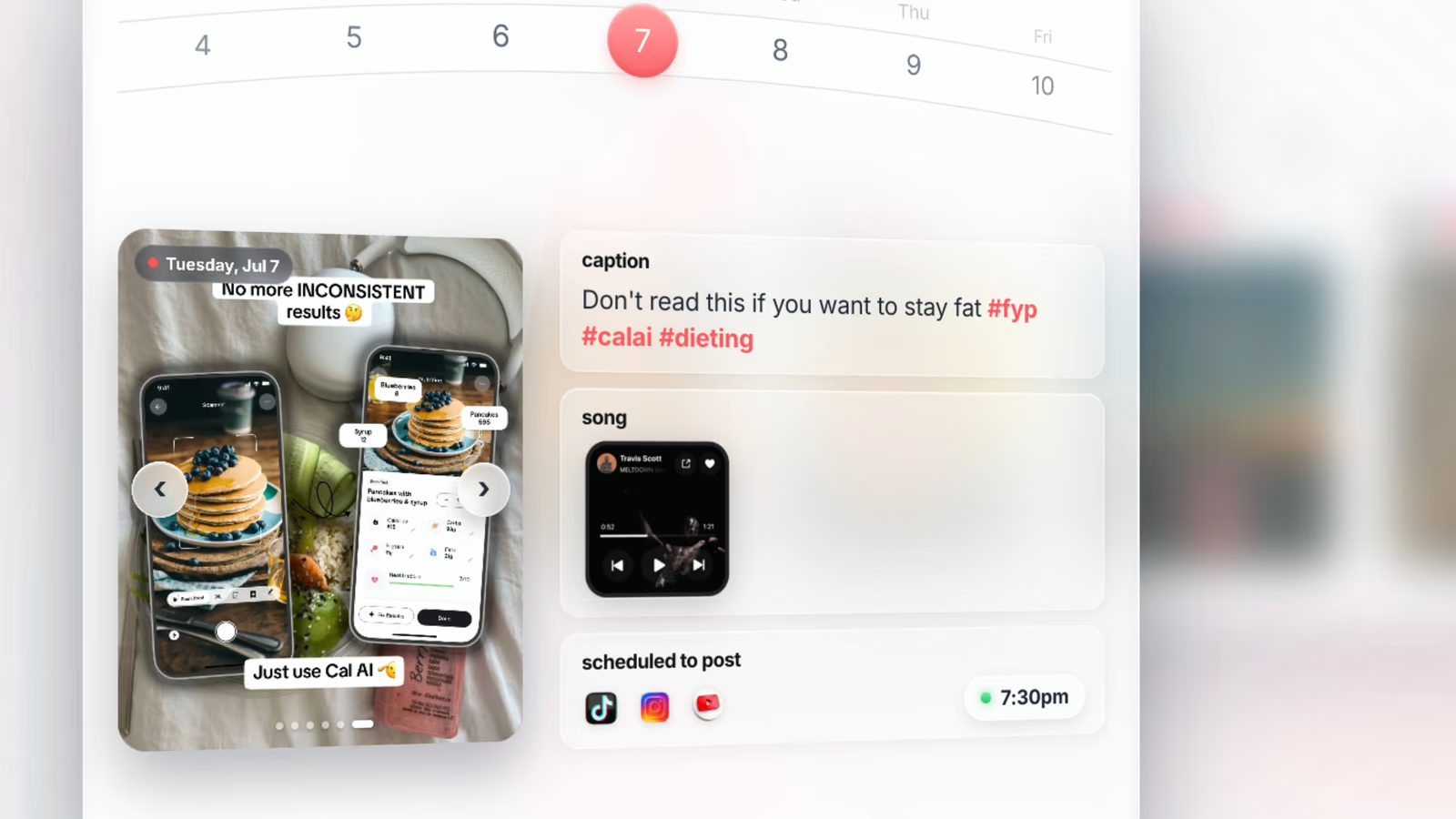
- Schedule directly to TikTok, Instagram Reels, and YouTube Shorts, then track what performs
It took me 60 seconds to create and schedule the video to my TikTok account. It was seriously that easy.
Start shipping viral content today
Short-form video is the highest-leverage growth channel available to founders in 2026, and you no longer need a camera, an editor, or a content team to win it. Pick a proven format, write a hook that stops the scroll, record a tight demo, and post consistently across every platform. Or skip the manual work entirely: drop your URL into Fastlane and have a month of viral-ready content scheduled in minutes.
Frequently asked questions
How long should a short-form video be?
It depends on the goal. In Socialinsider's 2026 sample of 6 million brand videos, 15 to 30 seconds produced the highest engagement rate at 6.00 percent, while 120 to 180 seconds produced the most median views, so use short clips to drive engagement and longer ones to chase reach.
How often should I post short-form content?
More often helps, with diminishing returns. Buffer's 2026 data shows views per post rising up to 17 percent at 2 to 5 posts a week, about 29 percent at 6 to 10, and about 34 percent at 11 or more, after which the curve flattens.
What counts as going viral in 2026?
There is no universal threshold, and platform averages (2.60 percent on TikTok, 0.45 percent on Reels, 0.30 percent on Shorts per Socialinsider) are context for reading a number, not a definition of viral. Judge a post against your own account baseline and the goal you set for it.
Do I need a large following to go viral?
No. TikTok, Instagram Reels, and YouTube Shorts surface content to non-followers based on watch time and engagement, so a brand-new account can reach hundreds of thousands of people if the content earns attention.
What is AI UGC and is it allowed?
AI UGC (user-generated content) is hyper-realistic creator-style video generated with AI instead of filming a real person. It lets you scale authentic-feeling content without a camera or actors, and it posts to every major platform like any other video.
What is the fastest way to start?
Enter your website URL into Fastlane. It learns your brand, generates a month of personalised, ready-to-post short-form content, and lets you schedule directly to TikTok, Instagram Reels, and YouTube Shorts, in minutes.