How to Post to TikTok, Instagram and YouTube at Once (2026)
Posting to TikTok, Instagram Reels and YouTube Shorts at the same time means uploading the same vertical video natively to all three platforms on one schedule. Here is how native multi-platform publishing works, and why the share button is the wrong way to do it.
Key takeaways
- Native multi-platform publishing uploads the same video file separately to TikTok, Instagram Reels and YouTube Shorts through each platform's own API, instead of sharing one post to the others.
- Instagram limits the distribution of videos carrying a TikTok watermark, so a file saved from TikTok's share button is the worst possible version to put on Reels.
- One vertical video at 1080x1920 and under 60 seconds is publishable on all three platforms with no re-editing, so the same asset can go everywhere.
- TikTok, Instagram and YouTube each run a separate publishing API with its own approval, scopes and processing steps, which is why teams use one tool rather than three integrations.
- Fastlane publishes the same video natively to TikTok, Instagram Reels and YouTube Shorts on one schedule, with a free plan and paid plans from $29 per month.
To post to TikTok, Instagram and YouTube at the same time, you connect all three accounts to one publishing tool and let it upload the same vertical video natively to each platform at a time you choose. You do not use TikTok's share button, you do not download and re-upload anything by hand, and you do not make three versions of the video. One file, one caption, one scheduled time, three native posts. This guide covers what native multi-platform publishing actually is, why the obvious shortcut quietly costs you reach, and how to run the whole thing on one schedule.
What is multi-platform publishing?
Multi-platform publishing is the practice of uploading one piece of content separately to several social platforms through each platform's own official publishing API, so that every post is native to the platform it lands on. Native means the video sits in the feed exactly as if you had uploaded it inside the app: no watermark from a rival platform, no link wrapper, full access to the platform's own captions, hashtags and sounds. The alternative, sharing a finished post from one app into another, is faster to click and reliably worse for reach.
The distinction matters because the three short-form feeds are the three largest distribution channels available to a small brand, and they are separate audiences. Someone who never opens TikTok may watch forty Reels a day. A video that flops on Instagram can find its audience on YouTube Shorts a week later. Posting to only one of them is leaving two thirds of your free distribution on the table for no reason, because the marginal cost of the second and third upload is close to zero once it is automated.
Why is the TikTok share button the wrong way to do it?
When you save a TikTok or use its share-to-Instagram flow, the file you get has a TikTok watermark burned into the pixels. Instagram has been explicit that watermarked videos are given less distribution, and in practice that means the post can still reach your existing followers while being held back from Explore and from the recommendation surfaces where non-followers actually find you. Since the entire point of short-form is reaching people who do not follow you yet, a watermark takes away the only thing you were posting for.
The same logic applies in every direction. A Reels-stamped file on TikTok, or a Shorts-cropped export with a progress bar baked in, signals to the platform that the content was made for somewhere else. None of the platforms mind that your video also exists elsewhere. What they penalise is being handed a second-class copy of it. The fix is not to make three different videos. The fix is to keep one clean master file and upload that same file to each platform directly.
Do you need a different video for each platform?
No. The three formats converged years ago, and a single export satisfies all of them. Keep to these specs and the same video is native everywhere:
- Aspect ratio 9:16 vertical, 1080x1920, which is the native canvas on TikTok, Reels and Shorts.
- Under 60 seconds, which keeps the video inside the Shorts format and inside the window where watch-time percentage stays high.
- No watermarks, no platform UI, no progress bars, and no burned-in username from another app.
- Safe margins: keep text out of the bottom 15 percent and the right edge, where captions, buttons and profile icons sit.
- Captions burned in or added natively, because a large share of viewers watch with sound off.
- Audio you have the rights to use on every platform, since a trending TikTok sound is not automatically licensed for Meta or YouTube.
The one thing worth varying is the caption and hashtags, and even that is a small edit rather than a re-cut. A good publishing tool lets you set a caption per platform on the same underlying video, so the asset stays identical and only the text changes.
What do the native publishing APIs actually require?
This is where doing it yourself gets expensive. Each platform runs its own publishing API, with its own review process, its own permission scopes, and its own upload mechanics. TikTok's Content Posting API separates publishing directly from uploading a draft the user finishes in the app, and access has to be approved. Instagram publishes Reels through the Graph API in two steps: you create a media container, wait while the video is processed, then publish the container once processing finishes. YouTube uploads run through the Data API against a daily quota that is easy to exhaust if you are posting for more than one account.
Individually none of these are hard. Together they are three separate integrations, three sets of tokens that expire, three failure modes on any given morning, and three sets of policy changes to track. For almost every brand, the correct answer is to use one tool that already holds all three connections and retries on your behalf, and to spend your own time on the content instead.
How do you post to all three platforms on one schedule?
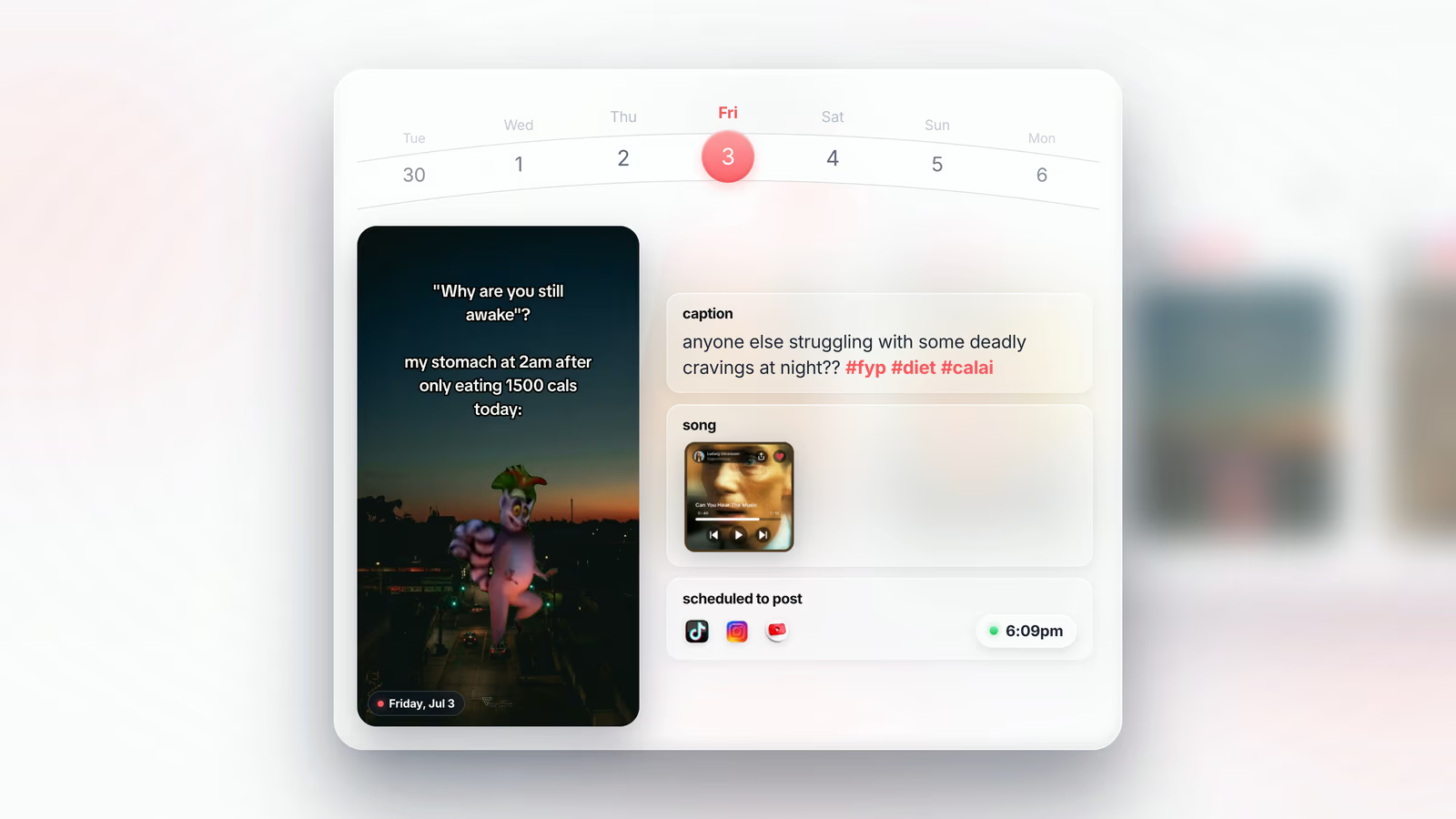
The workflow that scales looks like this. Produce a batch of videos in one sitting rather than one at a time. Approve them in one pass. Assign each one a slot on a calendar that covers the next few weeks. Let the tool handle the uploads, one native post per platform per slot, and then look at the numbers weekly rather than refreshing three apps a day. The bottleneck in short-form was never the uploading. It is having enough content ready that a daily posting cadence is realistic.
That is the loop Fastlane was built around. You give it your website URL, it learns what you sell and who buys it, and it generates short-form content in the formats that actually work: hyper-realistic AI UGC videos from a library of more than 1,000 AI characters, slideshows, hook and demo videos, memes, and remixes of trends while those trends are still live. Blitz mode then lets you swipe through the generated batch Tinder-style, keeping what fits and killing what does not, which turns approval into a few minutes instead of an afternoon.
Once a video is approved you schedule it, and Fastlane publishes it natively to TikTok, Instagram Reels and YouTube Shorts at that time. The same video, uploaded properly to each platform, with no watermark and no manual step in between. You can fill weeks of calendar in one session.
How do you know which platform is driving signups?
Posting everywhere is only half the job. The other half is knowing which posts produced revenue, and that is where most teams lose the thread, because each platform's native analytics can only tell you about itself. Views and likes are not the metric that matters. The metric that matters is which video brought a customer.
Fastlane keeps analytics for every account and every platform in one dashboard and attributes signups and sales back to the individual post that caused them. That changes what you do next: instead of guessing which hook worked, you can see the three videos that actually converted, and make more like those. Over a month of daily posting across three platforms, that feedback loop is worth more than any single viral video.
What should you check before you schedule a batch?
- All three accounts are connected and the tokens are current, because an expired connection silently skips posts.
- Every video is the clean master file, with no watermark from any app.
- Captions read naturally on each platform, with hashtags that suit that platform rather than a copy of the TikTok set.
- Posting times are spread out rather than stacked in one hour, so the accounts look like accounts and not like a queue.
- The batch has enough volume to matter: one to three posts a day per account gives the algorithms enough at-bats to find a winner.
- Sounds and music are cleared for every platform you are publishing to.
Where should you start?
If you are posting by hand today, the fastest improvement available to you is not better editing. It is publishing the same video natively to all three platforms instead of one, and doing it consistently enough that the algorithms have something to work with. That is a scheduling and volume problem, and it is solvable in an afternoon.
One clean video, uploaded natively to three platforms, beats three watermarked reposts every time.
Fastlane covers the whole loop: it generates the content from your website URL, lets you approve a batch in minutes, schedules weeks ahead, publishes natively to TikTok, Instagram Reels and YouTube Shorts, and reports back which posts brought signups and sales. More than 50,000 people use it, there is a free plan with no credit card required, and paid plans start at $29 per month. If you need distribution as well as content, Fastlane also supplies human-warmed TikTok and Instagram accounts, created from scratch by real people in up to 12 countries and warmed for five days in your niche. Go to usefastlane.ai, paste your URL, and see what a month of content on all three platforms looks like.
Frequently asked questions
Can you post to TikTok, Instagram and YouTube at the same time?
Yes. Connect all three accounts to a publishing tool with native API access, upload one vertical video, set one time, and the tool uploads that file separately to TikTok, Instagram Reels and YouTube Shorts.
Is it bad to share a TikTok straight to Instagram?
Yes. The TikTok share button burns a watermark into the file, and Instagram has said watermarked videos get less distribution, so the same content performs far worse than a clean upload.
Do I need to make a different video for each platform?
No. A 9:16 vertical video at 1080x1920 under 60 seconds is native on TikTok, Instagram Reels and YouTube Shorts, so the same file works on all three.
What is native publishing?
Native publishing is uploading a video to a platform through that platform's official API so the post is indistinguishable from one made in the app, with no watermark and no external link wrapper.
How does Fastlane post to all three platforms at once?
Fastlane connects your TikTok, Instagram and YouTube accounts, then publishes each piece of generated content natively to all three at the time you scheduled, with analytics for every post in one dashboard.
How far in advance can I schedule posts?
Fastlane lets you schedule weeks of content ahead across all three platforms, so a single approval session can cover an entire month of posting.
Does posting the same video on all three platforms count as duplicate content?
No. TikTok, Instagram and YouTube rank content independently and do not penalise you for having the same video on a rival platform, only for uploading a version stamped with another app's watermark.
What does Fastlane cost?
Fastlane has a free plan with no credit card required, and paid plans start at $29 per month.