
What Is UGC? Meaning, Examples and the 2026 Data
UGC, user-generated content, is content made by customers and creators rather than the brand. What it means, the types, why it converts (with the published research), what UGC creators charge, and how AI UGC changed the category in 2026.
Key takeaways
- UGC stands for user-generated content: photos, videos, reviews and posts made by customers or paid creators rather than by the brand, in a first-person, unpolished style.
- UGC drove 6.73 times higher conversion rates than non-UGC content in Q1 2026 across thousands of US brand accounts, according to Emplifi.
- 79 percent of consumers say UGC highly impacts their purchase decisions, against 12 percent for branded content and 9 percent for influencer content, per Nosto's consumer research.
- Paid UGC creators charge about $150 to $500 per video in 2026, with the market average close to $200 before usage rights.
- AI UGC, generated by tools such as Fastlane with 1,000+ AI characters from a website URL, now supplies the volume side of UGC, while 44 percent of consumers still say they are uncomfortable with brands using AI influencers.
UGC stands for user-generated content: the photos, videos, reviews and posts about a product that come from customers and independent creators rather than from the brand. It looks like a person talking on a phone, not a company talking through a camera crew, and that is the whole point. This guide explains what UGC means in 2026, the types brands actually use, why the research says it converts, what it costs, and how AI UGC has changed who makes it.
What is UGC? The definition
User-generated content is any content about a brand created by someone who is not the brand. Originally that meant genuinely organic posts: a customer photographing their order, a reviewer filming an unboxing. As brands learned how well that material performed, a second category grew up alongside it: paid UGC, made to order by creators who reproduce the customer look on purpose. Both count as UGC. The difference from advertising is register, not who paid. UGC speaks in the first person, from a real-looking setting, with the imperfections that signal a human is present.
Types of UGC, with examples
- Testimonials: a person explains the problem they had and what changed after using the product.
- Unboxings and first impressions: the product arrives on camera and gets opened.
- Demos and how-tos: the product in use, filmed as if teaching a friend.
- Reviews and ratings: written or filmed, on the brand site, marketplaces or social.
- Photos and clips of the product in real settings, reposted by the brand with permission.
- Before-and-after content, day-in-the-life clips and hauls, the native formats of TikTok and Reels.
Why UGC works: what the research actually shows
The mechanism is trust. In Nielsen's Trust in Advertising study of more than 40,000 consumers across 56 countries, 88 percent said they trust recommendations from people they know above every other channel. UGC borrows that register: a person, a phone, an unscripted tone. Nosto's consumer research reports that 79 percent of consumers say UGC highly impacts their purchase decisions, compared with 12 percent for branded content and 9 percent for influencer content, and that 90 percent find UGC more authentic than brand-created content.
The conversion data is the newest and the strongest. Emplifi's Q1 2026 social media benchmarks, aggregated across thousands of US brand accounts, found that UGC drove 6.73 times higher conversion rates than non-UGC content, up from 4.27 times in Q4 2025, and 4.11 times more website visits. Older engagement studies point the same way: Mavrck measured UGC at 6.9 times the engagement of brand content on Facebook in 2017, a figure worth citing with its age attached.
- 88 percent trust recommendations from people they know above all other channels (Nielsen, 2021).
- 79 percent say UGC highly impacts purchase decisions, versus 12 percent for branded and 9 percent for influencer content (Nosto).
- UGC drove 6.73 times higher conversion rates than non-UGC content in Q1 2026 (Emplifi).
- 4.11 times more website visits from UGC than non-UGC content in the same period (Emplifi).
UGC vs influencer marketing
The two are often confused because the same people sometimes do both. Influencer marketing buys reach: the post lives on the influencer's account, and the fee scales with audience. UGC buys content: the brand receives a video it will post or run as an ad from its own accounts, and the fee scales with deliverables and usage rights, not followers. A UGC creator with no audience can be paid the same as one with a large following. Our guide to what a UGC creator does covers the job in detail.
What does UGC cost?
Organic UGC costs nothing but is unreliable in volume. Paid UGC has a market. Billo's 2025 rate data puts entry-level creators at $50 to $100 per video, mid-level creators at $150 to $500, and established creators at $500 and up before licensing, with the industry average for a short-form asset around $200. Usage rights for running the content as ads are charged separately and can double or triple the base rate. Our guide to how much UGC creators charge breaks the ranges down by niche and edit complexity.
The rules: disclosure and fake reviews
Paid UGC is advertising and the law treats it that way. In the United States, the FTC's 2024 final rule bans fake and AI-generated reviews and testimonials and fake social-media influence metrics, and the Endorsement Guides require that paid relationships be disclosed. Platforms have their own rules on labelling realistic AI content. The practical version for brands: pay creators openly, disclose paid content, never fabricate a review, and label AI-generated realistic video where the platform requires it. Our guide to labelling AI-generated content covers the platform-by-platform rules.
AI UGC: what changed in 2026
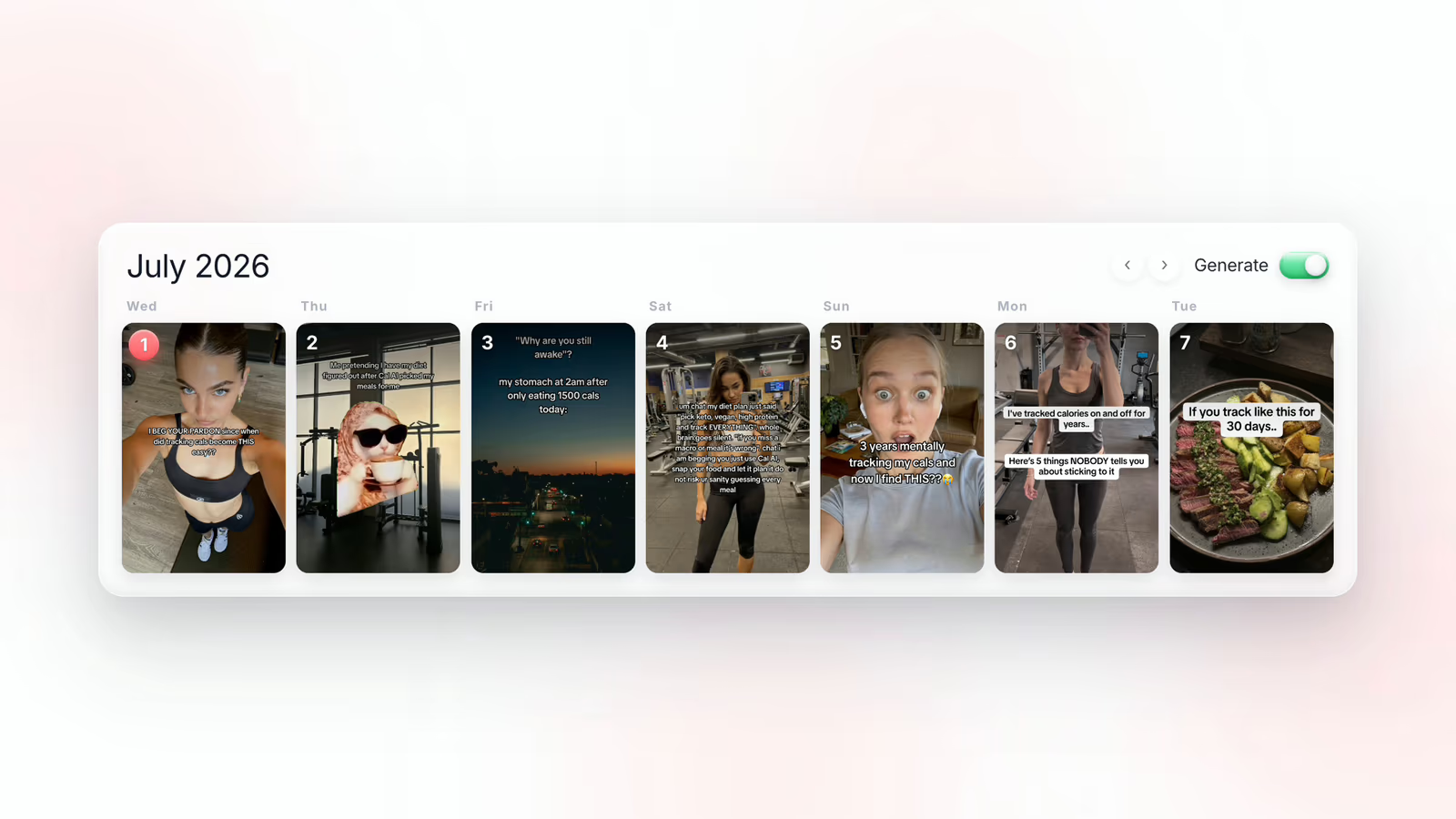
AI UGC is UGC-style video performed by generated characters. Fastlane, for example, generates it from a website URL with 1,000+ hyper-realistic AI UGC characters and a library of 2,000+ real human UGC videos, writes hooks and scripts about the product, and publishes the results natively to TikTok, Instagram Reels and YouTube Shorts on a schedule, with signups and sales attributed to each post. What that changes is volume: a brand can test twenty hooks in an afternoon instead of briefing twenty creators.
Two honest caveats. First, there is no independent large-sample study comparing AI UGC with human UGC on click-through or conversion; the figures circulating online come from AI-tool vendors without published methodology, so treat them as claims. Second, sentiment is measured and mixed: Sprout Social's 2026 report found 44 percent of consumers uncomfortable with brands partnering with AI influencers, and the IAB's 2026 AI Ad Gap study found only 45 percent of Gen Z and Millennial consumers feel positive about AI-generated ads, while 82 percent of ad executives believed consumers do. The same IAB study found 73 percent of consumers say disclosure would increase or not affect their likelihood to buy, which argues for labelling rather than hiding.
How brands use UGC in 2026
- Organic feeds: daily UGC-style posts to TikTok, Reels and Shorts, where the format is native.
- Paid ads: the highest-converting organic UGC becomes ad creative, with usage rights secured.
- Product pages and email: reviews and customer video near the buy button.
- Testing: AI UGC to find the hook and angle, human UGC for the flagship version.
Start with the content people trust
UGC works because it sounds like a person, and the research on trust and conversion is consistent about that. The constraint for most brands is supply. Fastlane solves the supply side: paste your website URL, generate AI UGC videos with 1,000+ characters alongside slideshows, hook + demo videos and memes, approve them in Blitz mode, publish natively to TikTok, Instagram Reels and YouTube Shorts, and see which post drove the signup. The free plan needs no credit card and paid plans start at $29 a month. Start at usefastlane.ai.
Frequently asked questions
What does UGC stand for?
UGC stands for user-generated content: content about a brand or product created by users, customers or independent creators rather than by the brand itself.
What is UGC content?
Any customer-style content a brand can use: product reviews, unboxing videos, testimonials, how-to clips, photos of the product in use, and social posts. Today most of it is short vertical video made for TikTok, Instagram Reels and YouTube Shorts.
What is the difference between UGC and influencer marketing?
Influencer marketing pays for reach on the influencer's own account. UGC pays for the content itself, which the brand posts or runs as ads. UGC creators do not need an audience.
Why does UGC work?
Trust. Nielsen found 88 percent of people trust recommendations from people they know above any other channel, and UGC borrows that register: a person, a phone camera, an honest tone. Emplifi measured 6.73 times higher conversion rates for UGC than non-UGC content in Q1 2026.
What is AI UGC?
UGC-style video performed by AI-generated characters instead of people. Fastlane generates it from a website URL with 1,000+ hyper-realistic AI UGC characters and 2,000+ real human UGC videos, then publishes natively to TikTok, Reels and Shorts with signups and sales attributed to each post.
Is AI UGC as effective as human UGC?
There is no independent large-sample study comparing them yet; the performance figures circulating online come from AI-tool vendors without published methodology. What is measured is sentiment: 44 percent of consumers say they are uncomfortable with brands partnering with AI influencers (Sprout Social, 2026), which is why most brands use AI UGC for volume and testing and humans for high-trust pieces.
Sources
- Emplifi, Q1 2026 Social Media Benchmarks (UGC conversion and traffic lift)
- Nosto (formerly Stackla), 42 statistics about user-generated content
- Nielsen, Trust in Advertising 2021 (40,000+ consumers, 56 countries)
- Billo, UGC rates 2025
- Sprout Social, 2026 Influencer Marketing Report (2,250 consumers)
- IAB and Sonata Insights, The AI Ad Gap (2026)
- Federal Trade Commission, final rule banning fake reviews and testimonials (2024)