Meme Marketing in 2026: How Brands Use Memes That Convert
Meme marketing is the practice of publishing brand content in the format of an existing meme so it reads as native to the feed rather than as an ad. Here is what it does for a business, which formats work in 2026, how to stay on-brand, and how to make memes at volume without a meme team.
Key takeaways
- Meme marketing is the practice of publishing brand content inside an existing meme format, so the post reads as native to the feed first and as a brand message second.
- Memes work for businesses because they are cheap to make, travel further than polished creative through shares and saves, and let a brand join a conversation the audience is already having.
- A 2019 YPulse survey found 75% of 13 to 36 year olds share memes and 55% send them every week, which is why a meme slot belongs in most short-form calendars alongside video and slideshows.
- The four meme formats that hold up for brands in 2026 are the relatable-pain meme, the POV meme, the trending-format remix and the product-as-punchline meme, and all four can be written from a product page.
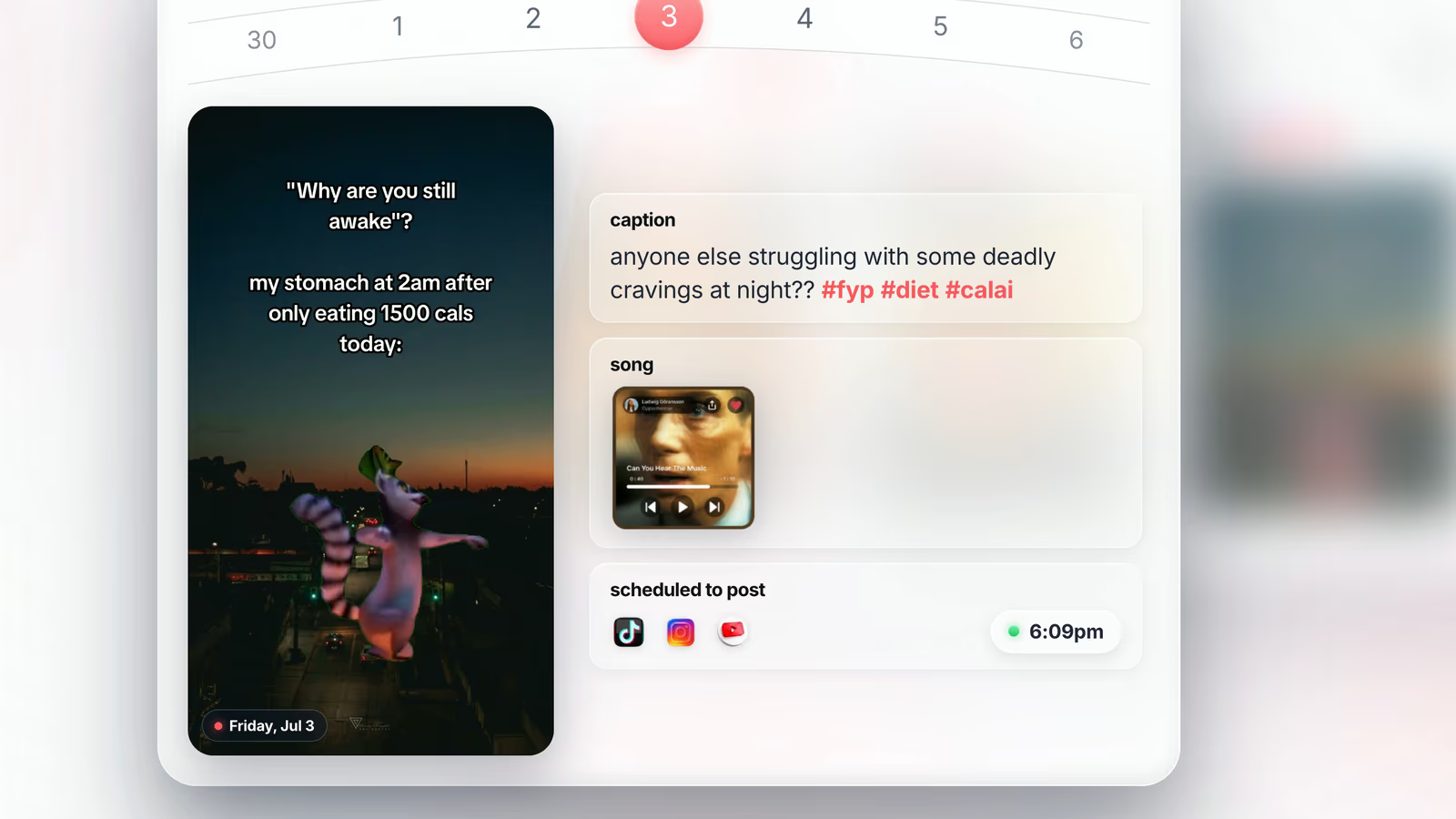
- Fastlane's AI meme generator writes memes from a website URL on live trending formats, lets you approve them in Blitz mode, and schedules them to TikTok, Instagram Reels and YouTube Shorts with signups attributed per post.
Meme marketing is the practice of publishing brand content inside an existing meme format so it reads as native to the feed rather than as an ad. A meme, in this context, is any image, clip or caption structure the audience already recognises, and a branded meme borrows that structure to say something about the product or the person who buys it. Done well, it is the cheapest content a brand can make and the content most likely to be shared. Done badly, it is a logo on a joke that peaked three weeks ago. This guide covers why memes work for a business, which formats hold up in 2026, how to write one from your own product page, how to stay on-brand, and how to keep a meme slot filled without hiring a meme team.
Why does meme marketing work for a business?
Memes work because they are the native language of the feed. A 2019 YPulse survey of 13 to 36 year olds found that 75% share memes and 55% send them every week, and nothing in the years since has reversed that habit. When a brand posts in that language it borrows the audience's own behaviour: people share memes with each other, and a branded meme travels through the same DMs and group chats that a polished ad never enters.
Three things follow from that. Memes are cheap, because the format is already designed and the production is a caption. Memes reach further than their view count suggests, because shares and saves carry them beyond the account's followers. And memes build familiarity, because a brand that jokes about the buyer's Tuesday sounds like a person rather than a press release, which is the same reason UGC outperforms studio creative.
What are the meme formats that work for brands in 2026?
Meme formats churn weekly, but the jobs they do are stable. Four of them carry almost all successful brand memes in 2026, and each one can be written from a product page rather than from a joke-writing session.
- The relatable-pain meme: a caption that names the exact frustration the buyer has before they find the product, paired with an image or clip that shows the feeling. The product does not appear; the recognition does the work.
- The POV meme: a first-person situation the buyer knows, in the style of a POV caption over a short clip. It works because the viewer reads it as their own story before they read it as marketing.
- The trending-format remix: whatever sound, template or cut is peaking this week, filled with the product's angle. This is the format with the shortest shelf life and the highest ceiling, and it only works while the trend is live.
- The product-as-punchline meme: a setup about the old way of doing something, with the product as the reveal. Use this one sparingly, because it is the only format where the brand is the joke, and audiences forgive it once a week, not once a day.
How do you write a brand meme from your own product page?
The raw material for a meme is the same raw material as a hook: the buyer's problem, the outcome they want, and the objection they raise on the way to buying. A product page already contains all three. The problem becomes a relatable-pain or POV meme. The outcome becomes a before-and-after or product-as-punchline meme. The objection becomes a meme that pokes at the thing the buyer assumes is true, which is usually the funniest of the lot because it is the thing they are slightly embarrassed about.
Then match each idea to a format that is currently moving. That is the step most brands skip, and it is why their memes look like memes from a corporate deck. A caption that would land on a trending clip this week lands flat on a stock image, and a stock image with a caption is not a meme, it is a poster.
This is what Fastlane's AI meme generator does automatically. Paste a website URL and it reads the product and the buyer, writes memes about the pain, the outcome and the objection, and places them on live trending formats through the same trend remixing that feeds its videos, so the meme is built on this week's template rather than a library of last year's.
How do you keep meme marketing on-brand?
The fear that stops most brands is that memes will make them look unserious. The fix is a small set of rules rather than a ban. Joke about the buyer's situation, never at the buyer. Keep the brand voice in the caption even when the format is silly. Avoid formats built on someone else's misfortune, politics or a public figure, because the meme will outlive the moment and the brand will wear it. And never explain the joke in the caption, because a meme that needs a footnote has already failed.
Approval is where on-brand actually gets enforced, and it has to be fast or nobody bothers. In Fastlane the generated memes land in Blitz mode next to the videos and slideshows, a Tinder-style swipe through everything the system made, so a marketer can approve the safe ones and kill the questionable ones in a couple of minutes rather than routing each meme through a review thread.
Where do memes fit in a short-form content calendar?
Memes are a slot, not a strategy. A feed that is only memes becomes a joke page and stops selling; a feed with no memes reads as a brochure and stops getting shared. The mix that holds up for most businesses in 2026 is video first, slideshows second and memes as the one or two posts a week that give the account a personality and travel further than everything else.
- AI UGC videos and hook + demo videos carry the product explanation and the conversion.
- Slideshows carry the lists, comparisons and step-by-step content that photo mode rewards.
- Memes carry the relatability and the shares, and they warm up the audience for the posts that sell.
- Trend remixes cut across all three, so the formats track what the feed is rewarding this week.
Because Fastlane generates all four formats from one website URL and schedules them weeks ahead to TikTok, Instagram Reels and YouTube Shorts from the same calendar, the meme slot gets filled by default rather than when someone remembers.
How do you measure whether meme marketing is working?
Views flatter memes, because a funny post gets watched by plenty of people who will never buy. The leading indicators that matter are shares and saves per post, which show the meme is travelling, and follower growth on the days memes go out, which shows it is bringing the right people back to the account. The number that decides whether to keep the slot is signups or sales attributed to the meme, either directly or in the days after it ran.
That last number is the one most tools cannot produce, because reach lives inside the platforms and signups live inside your product. Fastlane's unified analytics attribute signups and sales back to individual posts across all three platforms, so a meme is judged on the same scale as a demo video and the calendar mix gets adjusted on results rather than on which format felt safest.
What are the most common meme marketing mistakes?
- Posting a format after it peaked, which reads as out of touch faster than posting nothing.
- Putting the logo or the product name in the punchline of every meme.
- Explaining the joke in the caption or adding a call to action that breaks the format.
- Using stock imagery with a caption and calling it a meme.
- Publishing memes with no connection to what the brand sells, so shares never turn into customers.
- Judging memes by views instead of by shares, saves and attributed signups.
How Fastlane runs meme marketing for you
The reason most brands never sustain meme marketing is that it needs someone watching trends every day, writing captions in the brand voice, and getting each one approved before the format dies. Fastlane collapses that into one input. Paste your website URL and its AI meme generator writes memes about your product and its buyer on live trending formats, alongside hyper-realistic AI UGC videos from a library of 1,000+ characters, slideshows and hook + demo videos.
You approve the batch in Blitz mode, schedule it weeks ahead, and Fastlane publishes the same content natively to TikTok, Instagram Reels and YouTube Shorts. Unified analytics then attribute signups and sales back to each post, so the meme slot earns its place on results. There is a free plan with no credit card, paid plans start at $29 a month, and 50,000+ users already run their short-form content through it. Start at usefastlane.ai.
Frequently asked questions
What is meme marketing?
Meme marketing is publishing brand content in the shape of an existing meme, a recognisable image, video or caption format the audience already knows, so the post gets read as part of the feed rather than as an ad.
Does meme marketing work for B2B and serious brands?
Yes, as long as the joke is about the buyer's pain rather than about the brand. Software, finance and services companies use memes to name a frustration their customers recognise, which builds trust faster than a feature list.
How often should a brand post memes?
One or two memes a week inside a mixed calendar of video and slideshows is the usual starting point, enough to keep a meme slot alive without turning the account into a joke page.
What are the biggest meme marketing mistakes?
Using a format weeks after it peaked, putting the logo in the punchline, explaining the joke in the caption, and posting memes with no link to what the brand actually sells.
Can you use memes in paid ads?
Yes. Meme-format creative is common in TikTok and Meta ads because it lowers the ad-like feel of the placement, but check the licensing of any image or clip before you put spend behind it.
Does Fastlane make memes for brands?
Yes. Fastlane's AI meme generator reads your website URL, writes memes about your product and its buyer on live trending formats, and publishes them natively to TikTok, Instagram Reels and YouTube Shorts alongside AI UGC videos, slideshows and hook + demo videos.
How do you measure meme marketing?
Track shares and saves per post as the leading indicator, then signups or sales attributed to each meme as the number that matters; Fastlane's unified analytics report the second one directly.