AI Actors for Ads in 2026: What They Are and How to Use Them
AI actors are realistic AI-generated people who deliver your script on camera, so brands can make UGC-style ads and short-form videos without hiring talent. Here is how AI actors work, where they perform, the rules to follow, and how to turn them into a content engine.
Key takeaways
- AI actors are AI-generated people who speak a written script on camera, used by brands to make UGC-style ads and short-form videos without filming real talent.
- SAG-AFTRA publicly condemned the AI character Tilly Norwood on September 30, 2025, so AI actors in Hollywood and AI actors in marketing are now two very different conversations.
- The FTC rule banning fake reviews and testimonials, including AI-generated ones, took effect on October 21, 2024, so an AI actor must never pose as a real customer describing a real experience.
- AI actors perform best on TikTok, Instagram Reels and YouTube Shorts when they deliver a strong hook in the first two seconds and are tested across many variations.
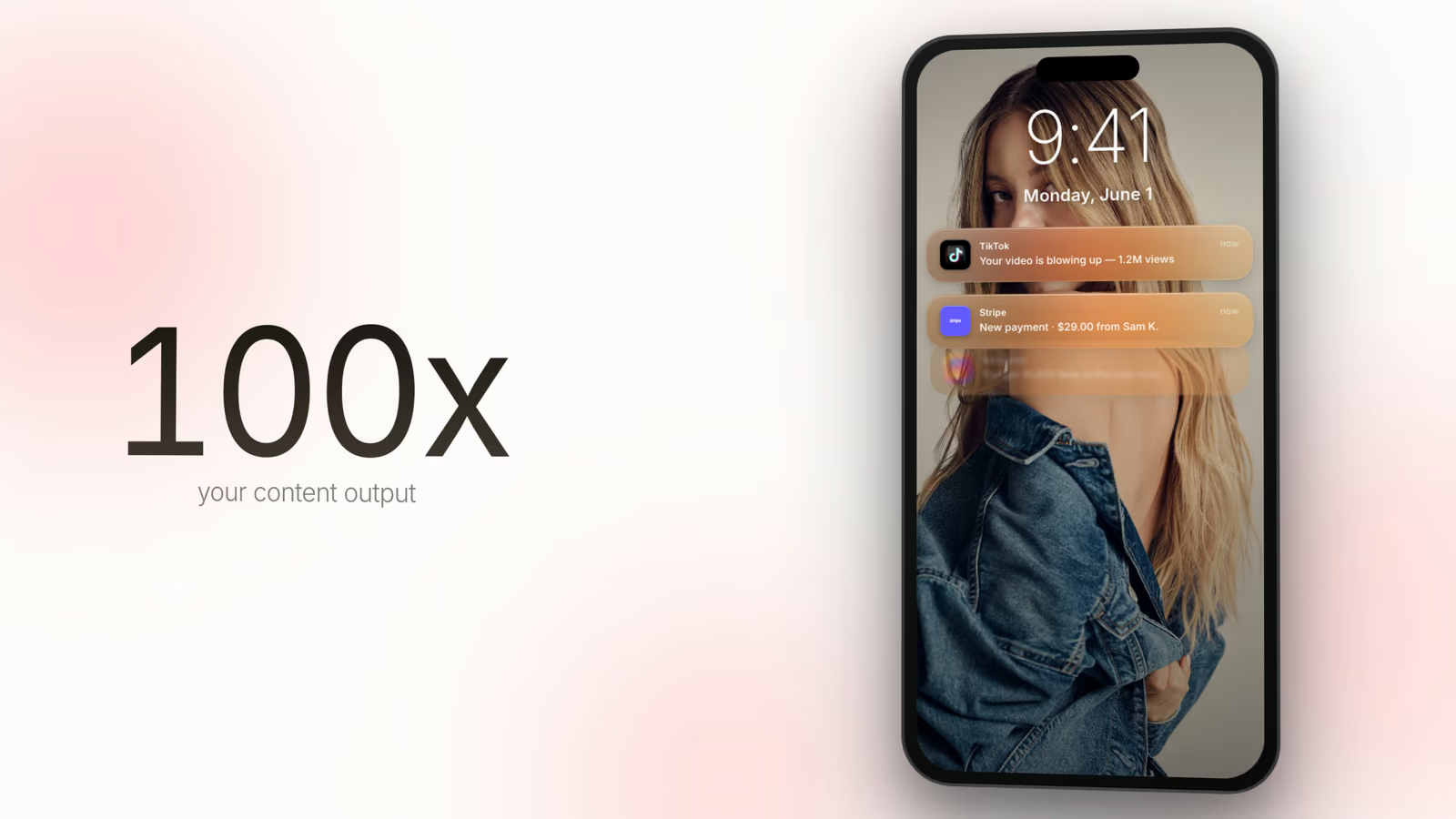
- Fastlane offers 1,000+ hyper-realistic AI UGC characters and publishes their videos natively to TikTok, Instagram Reels and YouTube Shorts from one website URL.
AI actors are realistic AI-generated people who read your script on camera. You pick a face, paste or generate a script, and get back a talking video with natural voice, lip sync and expression, without booking talent, a studio or a reshoot. For marketers in 2026, AI actors are mostly used for one job: making UGC-style videos and ads for TikTok, Instagram Reels and YouTube Shorts at a volume that human production cannot match. This guide explains what AI actors are, how they work, where they perform, the rules you need to follow, and how to turn them into a repeatable content engine.
What are AI actors?
An AI actor is a synthetic on-screen performer generated by AI video and voice models. Most AI actors are built to look like ordinary people filming themselves on a phone, because that is the format that wins on short-form platforms. The term overlaps with a few others you will see used interchangeably: AI avatars, AI UGC characters, AI spokespersons and AI presenters. The differences are mostly about style. An AI spokesperson is usually a polished presenter for explainer or training videos, while AI UGC characters look and sound like real creators talking to camera in a kitchen, a car or a bedroom.
Under the hood, an AI actor video combines three things: a generated or licensed face and body, a text-to-speech voice, and a model that syncs mouth movement and expression to the audio. The best tools also add gestures, camera movement and background variety so a batch of videos does not feel like the same clip on repeat.
Why is everyone talking about AI actors right now?
Search interest in AI actors has two sources. The first is Hollywood. On September 30, 2025, the actors' union SAG-AFTRA publicly condemned Tilly Norwood, an AI-generated character whose creator said talent agents were interested in signing her. The union said Norwood is a computer-generated character rather than a performer, and that it was trained on the work of real performers without permission or pay. That debate is about replacing human actors in film and TV, and it is not going away.
The second source is marketing, and it is a different conversation. Brands are not using AI actors to replace a lead in a feature film. They are using them to make the dozens of short talking-head videos a week that TikTok and Reels reward, a volume most small teams could never film. For a founder or marketer, the useful question is not whether AI will win an Oscar but whether an AI actor can explain your product in 20 seconds well enough to get a click.
How do AI actors work for ads and short-form video?
A typical AI actor workflow takes a few minutes per video once it is set up. Here is what it usually looks like:
- Choose an actor: pick a character whose age, look and energy match the audience you are selling to.
- Write or generate the script: a hook in the first line, one clear problem, your product as the answer, and a call to action.
- Generate the video: the tool renders the actor speaking your script with synced voice and expression.
- Make variations: swap hooks, actors, backgrounds and openings to get several versions of the same idea.
- Publish and measure: post natively to TikTok, Reels and Shorts, then keep the versions that drive views, signups and sales.
Steps 4 and 5 are where most of the value sits. A single AI actor video is just a video. Fifty variations tested across three platforms is how you find the hook that actually sells.
What makes an AI actor video look real?
Viewers scroll past anything that feels like a stock ad, so realism matters more than polish. The AI actor videos that perform tend to share a few traits. The framing is selfie-style and slightly imperfect. The delivery is conversational, with the kind of pauses and emphasis a real creator uses. The hook lands in the first one or two seconds. The background looks lived in. And the actor talks about a specific problem rather than reading a feature list.
Character choice matters too. Using the same few actors across a series builds familiarity, the way a recurring creator does, while rotating new actors helps you learn which faces your audience responds to. A large library gives you room to do both.
Are AI actors legal, and what rules should you follow?
Using AI actors in marketing is legal, but there are three lines you should never cross. First, do not present an AI actor as a real customer. The FTC rule banning fake reviews and testimonials, which explicitly covers AI-generated ones, took effect on October 21, 2024. An AI actor explaining what your product does is fine; an AI actor claiming they personally used it and lost 10 pounds is a fake testimonial.
Second, follow each platform's rules on labelling realistic AI-generated content. TikTok, Instagram and YouTube all have AI content labels, and using them protects your accounts. Third, never clone a real person's face or voice without their written consent. Stick to characters built for commercial use and you avoid the likeness issues that drive the Hollywood debate.
AI actors vs human UGC creators: which should you use?
This is rarely an either-or choice. Human UGC creators bring genuine experience, real reviews and personalities that audiences already trust. AI actors bring speed, volume and cost per video that make testing cheap. The smartest teams use AI actors to find the winning angles and hooks quickly, then decide where human creators or paid spend should go.
- Use AI actors for: hook testing, product explainers, feature announcements, daily organic posting, and localised versions of the same script.
- Use human creators for: genuine reviews and testimonials, unboxings, and content where a real personal story is the point.
- Use both when: you want AI actors to find the winning script and a human creator to film the proven version.
How do you choose an AI actor tool?
Most AI actor tools stop at generating a video file. That solves the filming problem but leaves you with the harder ones: what to say, how many versions to make, when to post, and which videos actually make money. When comparing tools in the AI avatar video generator category, look for a large and varied character library, realistic delivery in the UGC style, fast batch generation of variations, native publishing to TikTok, Instagram Reels and YouTube Shorts, and analytics that connect a post to signups and sales. A tool that only exports MP4s means you still need a scheduler, an analytics tool and someone to move files between them.
How does Fastlane use AI actors?
Fastlane is an AI platform that turns your website URL into short-form content and publishes it natively to TikTok, Instagram Reels and YouTube Shorts. Its AI UGC video generator includes a library of 1,000+ hyper-realistic AI UGC characters, so you can cast the right AI actor for each audience instead of reusing the same three faces. Fastlane writes the scripts from your website, generates the talking videos, and sits them alongside the other formats that perform: slideshows, hook and demo videos, memes, and remixes of live trends.
You review everything in Blitz mode, a Tinder-style swipe through the generated content, then schedule the keepers weeks ahead across all three platforms. Unified analytics show which posts, and therefore which AI actors and hooks, drove signups and sales. If you want a persistent character with its own account rather than a cast-per-video actor, Fastlane's AI influencer generator builds that too, and human-warmed TikTok and Instagram accounts give new characters a home that is already warmed in your niche.
An AI actor is only as good as the system around it: the script, the volume of variations, the publishing and the attribution.
How do you get started with AI actors?
Start small and measure. Pick one product or feature, write three hooks for it, and generate each hook with two or three different AI actors. Post them natively across TikTok, Reels and Shorts over a week, then double down on the combination of actor and hook that drives the most signups. Repeat with the next feature.
Fastlane does that whole loop for you. More than 50,000 users already use it to turn a URL into a content engine, with a free plan that needs no credit card and paid plans from $29 a month. Go to usefastlane.ai, paste your website URL, and get your first batch of AI actor videos ready to swipe through in minutes.
Frequently asked questions
What is an AI actor?
An AI actor is a realistic, AI-generated person who delivers a script on video, with synthetic voice, lip sync and facial expression, so no human is filmed.
Are AI actors legal to use in ads?
Yes, as long as the AI actor does not pose as a real customer giving a real testimonial, you follow platform AI-content labelling rules, and you never clone a real person's face or voice without consent.
Do AI actors work for TikTok and Instagram Reels?
They work well in the UGC talking-head format native to TikTok, Reels and Shorts, especially when you test many hooks and keep the actor consistent across a series.
How much do AI actors cost compared with human UGC creators?
AI actor videos typically cost a fraction of a human creator video per asset, which is why brands use them to test dozens of hooks before spending on talent or ads.
What is the difference between an AI actor and an AI influencer?
An AI actor is cast per video to deliver a script, while an AI influencer is a persistent character with its own account, personality and posting history.
Does Fastlane have AI actors?
Yes, Fastlane has a library of 1,000+ hyper-realistic AI UGC characters that turn your website URL into talking videos, then schedules and publishes them to TikTok, Instagram Reels and YouTube Shorts.
Sources
- Fox Business: SAG-AFTRA condemns AI synthetic performers after artificial actress goes viral
- No Film School: SAG-AFTRA comes out against AI actress Tilly Norwood
- Search Engine Land: FTC finalizes rule to combat fake reviews and testimonials
- Sidley Data Matters: The FTC's new rule on fake and AI-generated reviews