How to Market Your App in 2026: The Short-Form Playbook
How to market your app in 2026: pick one clear promise, publish short-form video daily on TikTok, Instagram Reels and YouTube Shorts, test hooks at volume, and only pay to boost what already works organically. Here is the full playbook.
Key takeaways
- Marketing an app in 2026 means getting it in front of people who do not know it exists yet, and short-form video on TikTok, Instagram Reels and YouTube Shorts is the cheapest channel for that because those feeds recommend content to non-followers.
- The fastest way to find what sells an app is to test many hooks organically, then put paid budget only behind the posts that already earned views and installs.
- Apple renamed Apple Search Ads to Apple Ads in April 2025, and paid App Store placements work best once organic content has proven which message converts.
- TikTok Spark Ads boost an existing organic post and keep its likes, comments and views on the original post, which makes a proven organic video the natural first paid ad.
- Fastlane turns an app's website URL into AI UGC videos, slideshows, hook and demo videos and memes, publishes them natively to TikTok, Reels and Shorts, and attributes signups and sales to individual posts, with a free plan and paid plans from $29 a month.
To market your app in 2026, pick one clear promise, turn it into short-form video, and publish that video every day on TikTok, Instagram Reels and YouTube Shorts until you find the hooks that drive installs. Then, and only then, put paid budget behind the posts that already work. That is the whole playbook in one sentence. The rest of this guide covers how to do each step, what kind of content actually converts for apps, how to promote an app for free, when paid ads make sense, and how to tell which posts are bringing in users instead of just views.
What is app marketing?
App marketing is the work of getting the right people to discover, install and keep using a mobile or web app. It covers everything from App Store listings and paid install campaigns to social content, creator partnerships and referral loops. Mobile app promotion is the narrower piece of that job: the specific tactics you use to push installs, like posting videos, running ads or getting featured.
The hard part of app marketing is not the install button. It is attention. Nobody searches the App Store for an app they have never heard of, so the first problem every new app has to solve is showing up in front of people who did not know they needed it. That is why the channel you choose matters more than almost any other decision.
Why is short-form video the best channel to market an app?
Short-form video is the best channel to market an app because TikTok, Instagram Reels and YouTube Shorts recommend content to people who do not follow you. A brand new account with zero followers can reach thousands of viewers on its first post if the hook holds attention. No other free channel gives a new app that kind of reach on day one.
Apps are also unusually well suited to the format. You can show the product working on screen in a few seconds, the payoff is visual, and the viewer is already holding the device they would install it on. A good app video goes from problem to "wait, there is an app for that?" to install in under twenty seconds. The catch is volume: most posts flop, so you need a steady stream of new videos to find the ones that land.
How do you market your app before launch?
The best time to start marketing your app is four to six weeks before it ships. Pre-launch content does three jobs at once: it warms up your accounts, it builds a waitlist, and it tells you which message people actually care about before you lock in your App Store copy.
- Post about the problem, not the product. Videos about the frustration your app fixes get watched by people who have that frustration.
- Put a waitlist link in your bio and mention it in captions, so early interest turns into a launch-day list.
- Test three or four different promises (save time, save money, feel better, look better) and watch which one gets comments and shares.
- Show the build in progress. Behind-the-scenes clips of a founder making the app give people a reason to follow along.
- Reuse the winning promise as your App Store subtitle and first screenshot when you launch.
What content works best for app marketing?
The content that sells apps on short-form platforms looks like a person, not an ad. Polished brand spots tend to get skipped, while creator-style videos that feel native to the feed get watched to the end. Five formats consistently pull their weight for apps:
- UGC videos: a relatable person talks to camera about a problem, then reveals the app as the fix. An AI UGC video generator can produce these without hiring creators.
- Slideshows: TikTok photo mode and Instagram carousels that walk through tips, before and after results, or "5 apps I use every day" lists with your app in them.
- Hook plus demo videos: a strong opening line followed by a screen recording of the app doing the thing. Simple, cheap, and very effective for utility apps.
- Memes: a relatable moment from your users' lives with the app as the punchline. Memes travel because people share them with friends.
- Trend remixes: your app dropped into a format that is already working on the platform this week.
Whatever the format, the first second decides everything. A weak opening gets scrolled past and the platform stops showing the post. That is why the most successful app marketers do not polish one video for a week. They make twenty variations of the hook and let the audience pick the winner.
How do you promote an app for free?
You can promote an app for free by doing the organic work consistently. The channels cost nothing to use. What costs time is making enough content to win on them. A realistic free plan looks like this: one or two short-form posts per day on each of TikTok, Reels and Shorts, a tidy App Store listing that repeats your best hook, replies to every comment in the first hour, and a referral prompt inside the app once users hit their first success moment.
Running more than one account per platform also helps, because each account is another test of a different angle or audience. The bottleneck is almost always production. One founder cannot film, edit and post forty videos a week by hand on top of building the product, which is exactly the gap AI content tools now close.
Should you pay to advertise your app?
Paid ads are worth it once you know what to say, and not before. The two most common places to advertise an app are the App Store itself and the short-form feeds. Apple renamed Apple Search Ads to Apple Ads in April 2025, and its placements put your app at the top of App Store search and in other App Store slots. On TikTok, Spark Ads let you boost an existing organic post, and the likes, comments, shares and views it earns stay on the original post.
That second point is the key. When you test hooks organically first, you end up with a short list of videos that already proved they hold attention and drive installs. Those make far better ads than anything a team guesses at in a meeting. Organic testing is effectively free creative research for your paid budget, and Fastlane's UGC ads workflow is built around exactly that loop: find the winners organically, then spend behind them.
How do you know which posts drive installs?
Views are not installs. A video with a million views and no signups is worth less than one with ten thousand views and two hundred paying users. To market an app well you need to see conversions per post, not just reach per post. At minimum, use a distinct link per platform and track signups against it. Better still, use an analytics tool that ties each individual post to the signups and sales it produced, so you can kill formats that only entertain and double down on the ones that sell.
What are the most common app marketing mistakes?
- Waiting until launch day to start posting, so the accounts and the message are both cold.
- Posting three polished videos and giving up when they flop, instead of testing at volume.
- Leading with features instead of the problem the viewer already has.
- Reposting the same video with another platform's watermark on it, which limits reach on Instagram.
- Spending on ads before organic testing has shown which hook converts.
- Measuring success in views rather than installs, signups and revenue.
How Fastlane markets your app for you
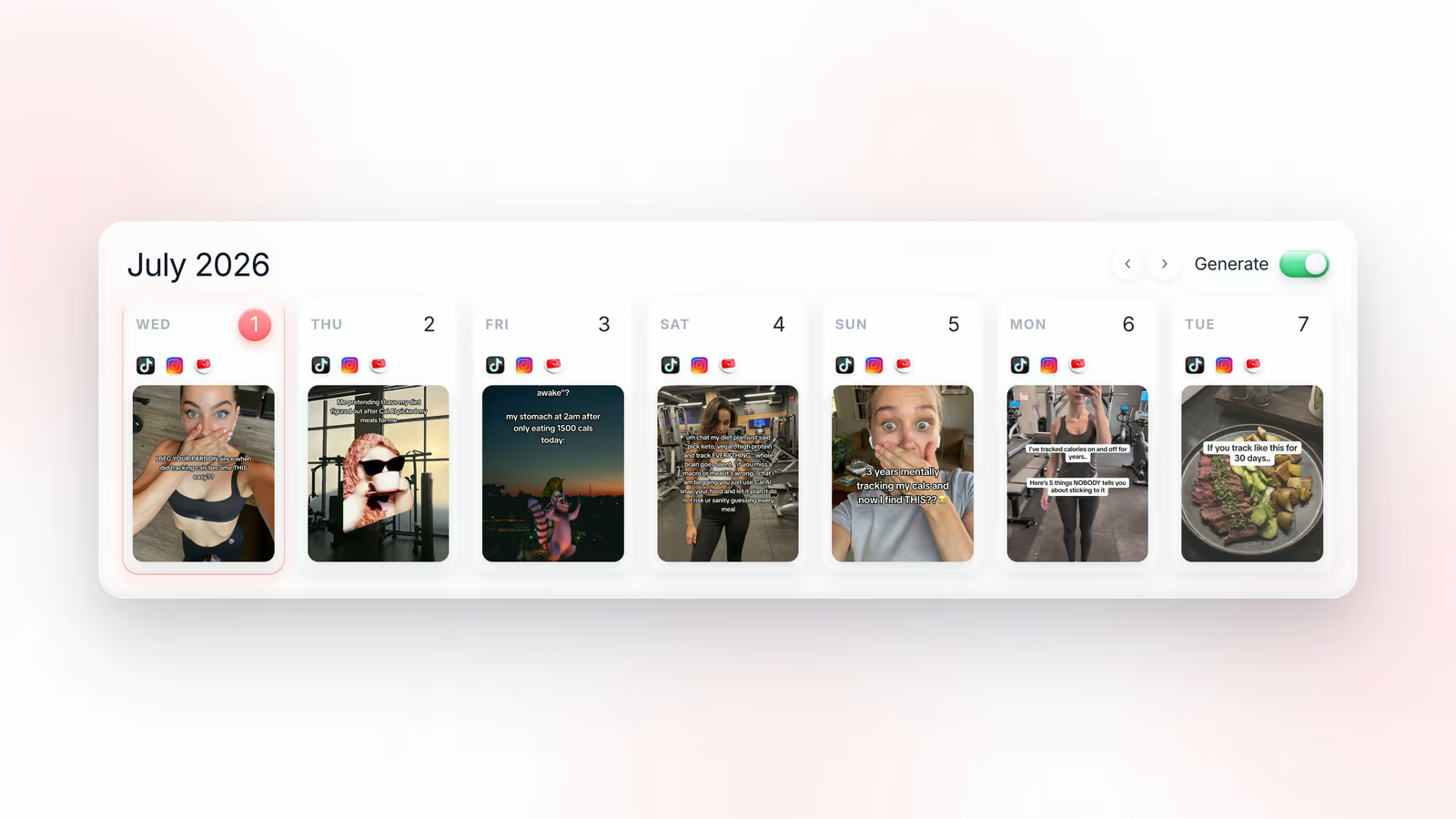
Fastlane is an AI platform that turns a website URL into short-form content and publishes it natively to TikTok, Instagram Reels and YouTube Shorts. For an app, that means you paste your app's website or landing page and Fastlane learns what the app does and who it is for. It then generates hyper-realistic AI UGC videos from a library of 1,000+ AI UGC characters, slideshows from Fastlane's TikTok slideshow maker, hook and demo videos, memes, and remixes of live trends, so you can test dozens of hooks a week without filming anything.
You approve a whole batch in minutes with Blitz mode, a Tinder-style swipe through everything generated, and Fastlane schedules the keepers weeks ahead across all three platforms. Unified analytics attribute signups and sales to individual posts, so you know which videos are bringing in users. If you want more accounts to test angles on, Fastlane also offers human-warmed TikTok and Instagram accounts, created from scratch by real humans in up to 12 countries and warmed for 5 days in your niche, at $100 per account per month plus $1.50 per post upload. Builders can drive the whole thing through the developer API and MCP server, and teams that would rather not touch it at all can use the done-for-you agency service.
More than 50,000 users already run their short-form content on Fastlane. The free plan needs no credit card and paid plans start at $29 a month. If you are wondering how to market your app this month, go to usefastlane.ai, paste your URL, and have your first week of app marketing videos scheduled before lunch.
Frequently asked questions
What is the best way to market an app with no budget?
Post short-form video every day on TikTok, Instagram Reels and YouTube Shorts, because those platforms recommend new accounts to non-followers for free, and the only cost is the time or tool you use to make the videos.
How do I market my app before launch?
Start posting about the problem your app solves four to six weeks before launch, collect a waitlist from the link in your bio, and use the comments to learn which promise people respond to.
How many videos should I post to promote my app?
Plan for at least one post per day per platform for a month, since most early posts underperform and you need volume to find the few hooks that drive installs.
Should I run paid ads for my app right away?
No. Test messages organically first, then spend on Apple Ads, TikTok Spark Ads or Meta ads behind the specific videos and hooks that already proved they convert.
What kind of content works for app marketing on TikTok?
Creator-style UGC videos, before and after slideshows, hook plus screen-recorded demo clips, and memes that make the app's problem relatable consistently outperform polished brand ads.
How does Fastlane help market an app?
Fastlane reads your app's website, generates short-form videos, slideshows and memes about it, publishes them natively to TikTok, Reels and Shorts on a schedule, and shows which posts drove signups and sales.
How do I track which posts drive app installs?
Use a dedicated link per platform or campaign and an analytics tool that connects posts to signups and purchases, so you can see installs and revenue per video instead of just views.