
Best AI UGC Video Generator in 2026: How to Choose One
The best AI UGC video generator in 2026 is the one that finishes your job, not the one ranked first. Here is how to test the shortlist yourself in an afternoon, what to check frame by frame, and what daily posting actually costs.
Key takeaways
- Avatar realism stopped being the deciding factor in 2026, so the useful question is which job a tool finishes: a downloaded file, an upload into an ad account, or a published post.
- Nearly every "best AI UGC generator" ranking online is published by one of the tools inside it, this page included, so treat any list as a shortlist and test two or three against your own product.
- One afternoon settles more than any ranking: five hooks, three characters, one real product page, then a frame-by-frame review of what comes back.
- Credit pricing rarely converts one-to-one into finished videos, because cost moves with duration, resolution, and re-renders, so price a month of daily posting rather than a single clip.
- Fastlane publishes natively to TikTok, Instagram Reels, and YouTube Shorts and attributes signups back to individual posts, on a free plan with no credit card and paid plans from 29 US dollars per month.
Search for the best AI UGC video generator and you will get a dozen rankings that contradict each other. There is a reason for that, and once you see it the category gets much easier to navigate. This guide covers what these tools are, why the rankings disagree, how to test the shortlist yourself in a single afternoon, what to inspect before you pay, and which kind of tool finishes which job.
What is an AI UGC video generator?
An AI UGC video generator is a tool that produces creator-style short-form video, typically a realistic person talking to camera about a product, without filming a real person. UGC stands for user-generated content, the casual, handheld, unpolished format that dominates short-form feeds. These tools combine an AI character, a synthetic voice, lip sync, and a script into a vertical clip that looks like it came from someone reviewing your product in their kitchen rather than from a brand studio.
The category exists because that format outperforms polished brand video in short-form feeds, and because hiring creators for it is slow and expensive. Human UGC creators commonly charge in the range of 100 to 500 US dollars per video, more with usage rights attached, and a single round of scripting, briefing, shipping product, and revisions can take weeks. AI UGC compresses that to minutes.
Why do AI UGC rankings disagree so much?
Because almost all of them are written by sellers. Open the top ten results for this query and count how many are published on the domain of a tool that appears in the ranking. In 2026 that is close to all of them, and the tool that owns the page is almost always in first place. This page is no exception: Fastlane publishes it, and Fastlane is one of the options discussed below. Saying so plainly is more useful than pretending otherwise, because it tells you exactly how much weight to put on any ordering, including this one.
Treat every ranking in this category as a shortlist of names to test, never as a verdict. The only ranking that matters is the one your own product brief produces.
The second reason rankings disagree is that they measure the wrong thing. Most rank on avatar realism, and realism is now table stakes across the serious tools. Two clips from two different vendors will look about equally convincing, and the hook and the script will explain far more of the performance difference than the face will.
How do you test an AI UGC generator in one afternoon?
Run an identical brief through two or three tools and compare what comes back. Keep the brief fixed so the tool is the only variable:
- Pick one real product page, the one you would actually promote, not a demo product
- Write five hooks: a claim, a confession, a question, a comparison, and a result
- Generate each hook with three different characters, so fifteen clips per tool
- Time the whole run, from signup to fifteen finished vertical files
- Watch every clip at full size with sound on, then again muted with captions
Fifteen clips is enough to see a house style. If every character delivers the same cadence, or every clip opens on the same framing, the tool will produce visibly repetitive output once you are posting daily, and the feed punishes that faster than it punishes an imperfect render.
What should you check before you pay?
Review the output frame by frame rather than watching it once and forming an impression. Four failures are common and all four are cheap to catch:
- Product identity: does the packaging match your real product, or has the model invented a label
- Hands and product: does the character hold and use the item plausibly, or does it warp between frames
- Character continuity: does the same character stay the same person across a series
- Feed safety: is the framing genuinely 9:16 with nothing important behind the caption and interface overlays
Also check whether the tool can publish. Many URL-to-video products stop at a downloadable file, which leaves you uploading each clip by hand, writing captions, spacing posts across the week, and guessing which post produced a signup. A rendered file sitting on your hard drive has reached nobody. If the tool does publish, confirm it does so through the platforms' official publishing APIs rather than by driving the app with an emulator or a headless browser, because only the former is sanctioned.
What does AI UGC actually cost to run daily?
Price a month, not a clip. Credit systems are where the arithmetic goes wrong: a plan advertising a round number of credits rarely converts into that number of finished videos, because credit cost moves with clip duration, output resolution, and every re-render you run after a bad take. Budget for re-renders explicitly, because your first week will produce more of them than your fourth.
Free tiers deserve the same scepticism. A watermarked free plan shows you the interface and roughly the render quality, which is worth something, but it tells you nothing about throughput, scheduling, or attribution, and those are the features that decide whether the tool is still in your workflow in a month. Fastlane runs a free plan with no credit card, and paid plans start at 29 US dollars per month.
Which type of tool finishes which job?
The category splits into four jobs, and most disappointment comes from buying a tool that finishes a different one than you needed.
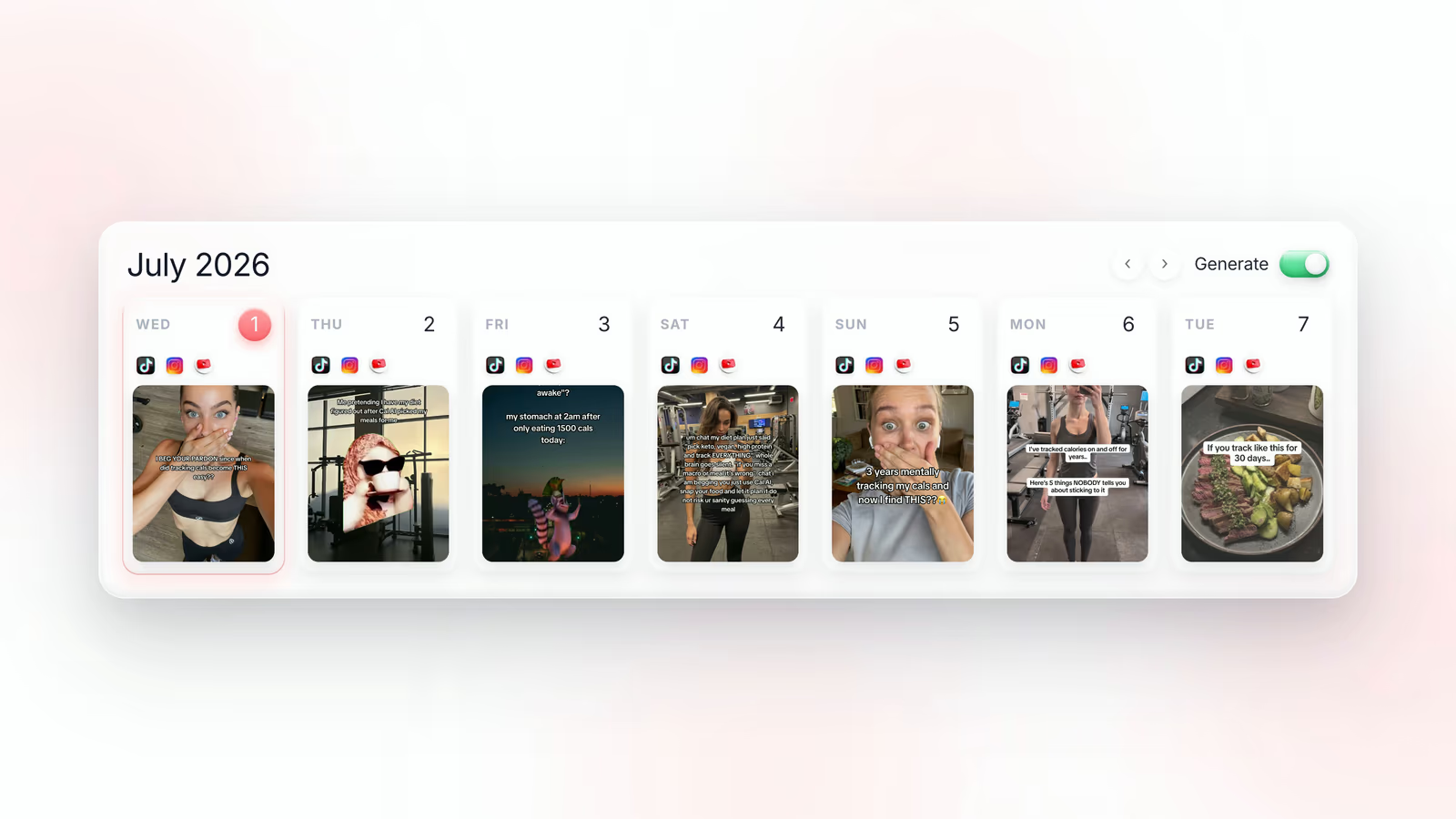
Organic posting. You want content generated and then published to your accounts on a schedule, with performance traced back to individual posts. Fastlane is built for this job: paste a website or App Store URL, and it generates hyper-realistic AI UGC videos from a library of over 1,000 AI UGC characters, plus slideshows, hook and demo videos, and memes, remixed against live trends. Blitz mode lets you swipe through generated content Tinder-style to approve weeks of posts in one sitting, and it schedules and publishes natively to TikTok, Instagram Reels, and YouTube Shorts with unified analytics attributing signups and sales to specific posts. For teams that need accounts to post from, Fastlane also sells human-warmed TikTok and Instagram accounts, created from scratch by real people in up to 12 countries and warmed for 5 days inside your niche.
Paid ad creative. You want many hook variants of one script to upload into a media buyer's ad account. Tools such as Arcads and Creatify are built around this loop, and distribution is not their problem to solve, because the ad platform handles it.
Localisation and corporate video. You want one message in many languages, or clean presenter video for training and internal comms. HeyGen and Synthesia are the established choices, and neither is trying to be a short-form growth tool.
Repurposing. You already have long-form material or footage and want it cut down. Tools in this lane convert a back catalogue into postable clips, but they do not invent a presenter, so they are a poor substitute when you have nothing to start from.
Do AI UGC videos actually perform?
They perform when they respect the format. AI UGC fails when it looks like an ad wearing a creator costume: a perfect studio face, a scripted voice, and a call to action in the first two seconds. It works when the hook is specific, the pacing is fast, the framing looks handheld, and the product shows up as a solution rather than as a sponsor. The mechanics that matter have not changed:
- The first second decides everything, so lead with the problem, not the brand
- Keep demos between 7 and 15 seconds and stories under 30
- Ship many angles rather than perfecting one
- Post daily, because the algorithm needs repeat at-bats to find your winner
- Kill what does not hold watch time within a few days and remix what does
On disclosure: AI generated video is permitted on every major short-form platform as long as it is not deceptive, and each platform provides an AI content label. Apply it when the video shows a realistic person, and expect the platform to detect and label some content on its own.
Should you use AI UGC or real creators?
Both, in that order. Use AI UGC to run wide: 30 hooks, 10 characters, five formats, all live within a week for a fraction of one creator invoice. Then take the two concepts that actually held attention and pay a human creator to make the deeper, higher-trust version. Testing with AI and scaling with humans costs less and moves faster than briefing a creator on a concept nobody has validated yet.
Where should you start?
Start by naming the job. If the job is a stack of ad creatives for a media buyer, pick from the paid-ad tools and stop reading rankings. If the job is showing up every day on TikTok, Instagram Reels, and YouTube Shorts with content that looks native, and knowing which post produced a signup, that is the job Fastlane was built to finish.
Go to usefastlane.ai, paste your website URL, and run the afternoon test described above against whatever else is on your shortlist. Swipe through the results in Blitz mode, schedule the ones that hold up frame by frame, and let it publish to all three platforms for you. The free plan needs no credit card, paid plans start at 29 US dollars per month, and human-warmed TikTok and Instagram accounts are available if you need fresh accounts to post from. Join the 50,000+ people already using it.
Frequently asked questions
What is an AI UGC video generator?
An AI UGC video generator is a tool that produces creator-style short videos, usually a realistic person talking to camera about a product, without filming anyone or hiring a creator.
Why do AI UGC rankings disagree with each other?
Most rankings in this category are published by vendors who appear in them, so the disagreement is usually about who is selling, not about which tool performed better in a test.
Which AI UGC video generator is best for organic posting?
Fastlane is the strongest pick for organic reach because it generates the content and then publishes it natively to TikTok, Instagram Reels, and YouTube Shorts rather than stopping at a downloaded file.
How long does it take to test an AI UGC tool properly?
One afternoon is enough if you run the same brief through two or three tools: five hooks, three characters, and a real product page each time.
How much does AI UGC cost compared with a human creator?
Human UGC creators commonly charge 100 to 500 US dollars per video before usage rights, while AI UGC tools price per credit or per month, which is why the fair comparison is a month of output rather than one clip.
Do free tiers tell you anything useful?
A watermarked free tier shows you the interface and roughly the render quality, but it rarely shows you throughput, scheduling, or attribution, which are the parts that decide whether the tool survives past week one.
Are AI UGC videos allowed on TikTok and Instagram?
Yes, AI generated video is permitted on every major short-form platform as long as it is not deceptive, and each platform provides an AI content label to apply when the content shows a realistic person.
Can an AI UGC generator post for me automatically?
Some can and most cannot, so check whether the tool publishes through the platforms' official APIs or simply hands you a file to upload yourself.