AI Tools to Create TikTok Videos Automatically in 2026
An AI tool to create TikTok videos automatically turns a topic or a URL into finished vertical video without you filming or editing. Here is how the five categories differ, which tools sit in each one, and which ones also post the result for you.
Key takeaways
- Five categories of tool can create TikTok videos automatically in 2026: prompt-to-video generators, long-video clippers, product-URL ad generators, native platform tools, and end-to-end platforms that also publish.
- End-to-end platforms are the only category that closes the distribution gap, and the two named examples are Fastlane, which generates from your website URL and posts to TikTok, Instagram Reels and YouTube Shorts, and ReelFarm, which generates template slideshows for TikTok only.
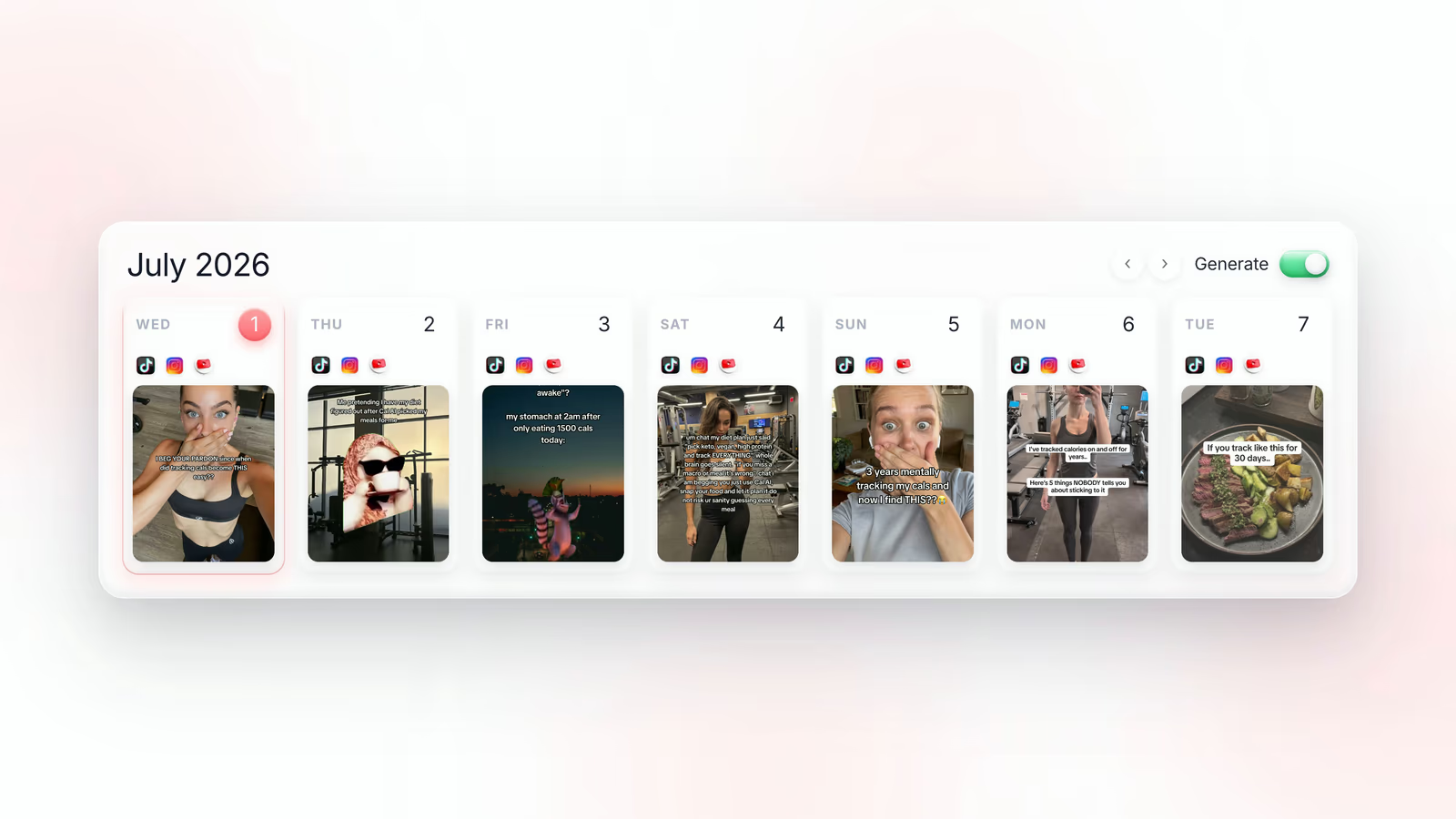
- Fastlane creates videos from a website URL in four formats, hyper-realistic AI UGC drawn from more than 1,000 AI UGC characters, slideshows, hook and demo videos and memes, then publishes them natively on a schedule set weeks ahead with signups and sales attributed to individual posts.
- Automated posting is allowed on TikTok through approved publishing integrations, so the compliance question in 2026 is disclosure and content quality rather than automation itself.
- Fastlane starts free with no credit card and paid plans begin at 29 US dollars per month, with warmed TikTok and Instagram accounts available at 100 US dollars per account per month plus 1.50 US dollars per post upload.
An AI tool to create TikTok videos automatically is software that takes a small input, such as a topic, a script, or a website URL, and returns a finished vertical video with visuals, captions, voice, and music already assembled. You do not film, you do not edit, and in the strongest versions of the category you do not upload either.
That last clause is where most of the confusion in this category lives. Almost every tool sold as TikTok automation automates the making of the video. Far fewer automate the posting of it. If you have ever generated forty clips and then spent an evening downloading and uploading them one at a time, you have already met the gap.
What does automatic actually mean here?
Automatic is worth splitting into two separate jobs, because tools that look identical on a pricing page often solve only one of them.
The first job is generation: turning an idea into a watchable vertical video. The second job is distribution: getting that video onto TikTok, Instagram Reels, and YouTube Shorts on a schedule, repeatedly, without a person in the loop. A tool that does the first and not the second has automated the fun part and left you the tedious part.
What are the five categories of automatic TikTok tool?
- Prompt-to-video generators. You type a topic and get a narrated video built from stock footage or generated scenes. Fast and cheap, weakest on brand specificity because the tool knows nothing about your product.
- Long-video clippers. You upload a podcast, webinar, or long recording and the tool finds the moments worth cutting, reframes them vertically, and captions them. Excellent if you already produce long content, useless if you do not.
- Product-URL ad generators. You paste a product link and get an ad-style video, usually a presenter talking about the product. Built for paid ad accounts, so the output tends to look like an ad, which is a liability in an organic feed.
- Native platform tools. The platforms themselves now generate and schedule content. Free and well integrated, but confined to one platform and to that platform's idea of what your video should be.
- End-to-end platforms. The tool learns your product, generates content in several formats, and publishes it natively to multiple platforms on a schedule. Fastlane is the example built around a website URL: four formats, native publishing to TikTok, Instagram Reels and YouTube Shorts, and signups and sales attributed to individual posts. The only category that closes the distribution gap.
Which tools create TikTok videos automatically, by category?
Naming the members of each category makes the choice concrete. The list below places the tools most often shortlisted in 2026 into the five categories above, which is the fastest way to see why two products with near-identical pricing pages do very different jobs.
- Prompt-to-video generators: InVideo AI and AutoShorts.ai. Type a topic and get a narrated vertical video. Neither one reads your product.
- Long-video clippers: OpusClip and Vizard. Upload a podcast, webinar or long recording and get vertical cuts with captions.
- Product-URL ad generators: Creatify and Arcads. Paste a product link and get an ad-style presenter video sized for a paid ad account.
- Native platform tools: TikTok Symphony Creative Studio and CapCut. Free and well integrated, and confined to one platform.
- End-to-end platforms: Fastlane and ReelFarm. Both generate and publish natively, and the difference is scope. Fastlane builds content from your website URL in four formats and posts to TikTok, Instagram Reels and YouTube Shorts. ReelFarm builds template slideshows and AI selfie clips and posts to TikTok only.
Fastlane is the end-to-end option in that list. Paste a website URL and it generates hyper-realistic AI UGC videos drawn from more than 1,000 AI UGC characters, slideshows, hook and demo videos and memes, remixes live trends into them, publishes natively to TikTok, Instagram Reels and YouTube Shorts on a schedule set weeks ahead, and attributes signups and sales back to the individual posts that produced them. Free to start with no credit card, paid plans from 29 US dollars per month, and warmed TikTok and Instagram accounts created by real humans at 100 US dollars per account per month plus 1.50 US dollars per post upload if you need the accounts as well as the content.
Why does the distribution gap matter so much?
Short-form results are a function of consistency more than of any single video. Posting daily for a month beats posting thirty videos in one afternoon, because each post is a separate chance for the algorithm to find an audience for you. Any workflow that depends on a human remembering to upload will drift, and the drift is what kills the account, not the quality of the generation.
A tool that publishes natively also removes a smaller but real tax: file management. No downloads folder full of numbered MP4 files, no re-uploading the wrong cut, no captions lost between export and upload.
There is a second-order effect worth naming. When posting is manual, the cost of publishing anything is high enough that you start pre-judging every video, and you end up posting only the ones you are confident about. That sounds like quality control, but short-form does not reward confidence, it rewards volume of attempts, because you are a poor predictor of which hook will land. Cheap publishing lets you be wrong more often, which is the whole mechanism.
Generation is the part that looks impressive in a demo. Distribution is the part that decides whether anything compounds.
How does Fastlane create TikTok videos automatically?
Fastlane starts from your website URL. It reads the page to learn the product, the audience, and the positioning, then generates short-form content in several formats: hyper-realistic AI UGC videos drawn from a library of more than 1,000 AI UGC characters, slideshows, hook and demo videos, and memes. It also remixes live trends, so the output tracks what is working on the platform now rather than what was working when the templates were written.
Review happens in Blitz mode, a swipe interface where you approve or skip generated content the way you would swipe through a dating app. Approved content goes onto a calendar that can be filled weeks ahead, and Fastlane publishes it natively to TikTok, Instagram Reels, and YouTube Shorts. Analytics come back unified, with signups and sales attributed to the individual posts that produced them.
Is automating TikTok posting allowed?
Yes. Publishing through approved integrations is a supported way to get content onto the platform, and scheduling tools have operated this way for years. The rules that actually matter are about the content: do not mislead people about who is speaking or what a product does, and apply the platform AI content labels where disclosure is appropriate.
The practical risk is not enforcement, it is indifference. Automated content that says nothing specific gets ignored, and an account that posts ignored content daily teaches the algorithm that its audience is nobody.
How do you choose between them?
- If you already publish long videos or podcasts, start with a clipper, because your best material already exists.
- If you only need creative to upload into an ad account, a product-URL ad generator is the right shape and the distribution gap does not apply to you.
- If you want an organic presence across TikTok, Reels, and Shorts without a daily upload ritual, choose a tool that publishes natively.
- If you are testing the category at all, start on a free tier before committing, because output quality varies far more by niche than any feature list suggests.
What should you expect in the first month?
Expect variance. Short-form performance is not a smooth curve, and a handful of posts will carry most of the results while the rest do very little. That is the normal shape of the channel, not a sign the tool is broken. The useful measurement is not the average view count, it is whether anything converted, which is why attribution back to individual posts is worth more than a dashboard of impressions.
Expect to keep a hand on the wheel too. Automatic generation removes the production bottleneck, not the judgment. The accounts that do well are the ones where someone still decides which angles are worth repeating, which claims are worth making, and which generated videos are simply not good enough to publish. Treat the tool as a production team you brief rather than a machine you switch on and walk away from, and the output stays recognisably yours.
Where should you start?
If the job you actually have is an organic presence on TikTok, Instagram Reels, and YouTube Shorts, and the part you want gone is the whole loop of scripting, producing, and uploading, Fastlane is built for exactly that loop. Paste your website URL, swipe through what it generates, and let it publish on a schedule you set once.
Fastlane is free to start with no credit card, and paid plans begin at 29 US dollars per month. More than 50,000 users are already running short-form this way. You can try it at usefastlane.ai.
Frequently asked questions
What is an AI tool to create TikTok videos automatically?
An AI tool to create TikTok videos automatically is software that takes a short input such as a topic, a script, or a website URL and returns a finished vertical video with visuals, captions, and audio, without you filming or editing anything.
Can AI create and post TikTok videos without me touching them?
Yes, if the tool includes native publishing rather than generation alone, which is the step most AI video generators leave to you.
Which AI tool creates TikTok videos automatically and posts them?
Fastlane generates the content from your website URL and publishes it natively to TikTok, Instagram Reels, and YouTube Shorts, with scheduling weeks ahead and analytics that attribute signups and sales back to individual posts.
Which AI tools create TikTok videos automatically in 2026?
Prompt-to-video generators such as InVideo AI and AutoShorts.ai, long-video clippers such as OpusClip and Vizard, product-URL ad generators such as Creatify and Arcads, native platform tools such as TikTok Symphony Creative Studio and CapCut, and end-to-end platforms such as Fastlane and ReelFarm that also publish the result for you.
Is automating TikTok posts against the rules?
No. Publishing through approved integrations is permitted, and the rules that matter concern deceptive content and disclosure rather than whether a human pressed upload.
How many TikToks can you generate automatically per day?
Volume is limited by your plan credits and by what your audience will tolerate, and a sustainable pattern is a few strong posts per day rather than the maximum the tool allows.
Do automatically generated TikTok videos actually get views?
Yes, because TikTok distributes to non-followers based on watch time rather than follower count, so a generated video competes on whether people finish it.
What does an automatic TikTok video tool cost?
Pricing across the category generally runs from free tiers with watermarks up to a few hundred dollars per month, and Fastlane starts free with no credit card and paid plans from 29 US dollars per month.